Memories of childhood
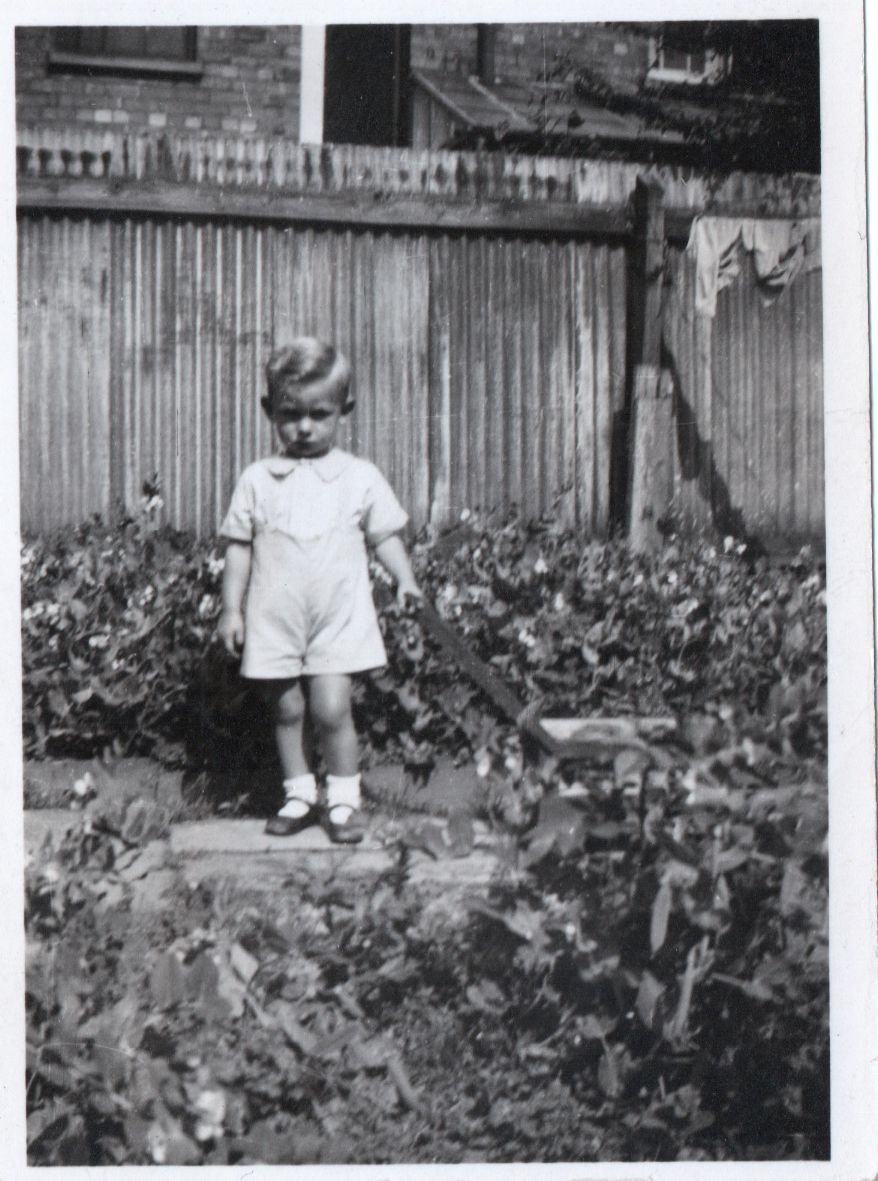
Earliest picture of yours truly, aged around 2?
My earliest memories are of R.A.F Horsham St Faith ( now known as Norwich Airport ). My parents lived in the married quarters there as dad was a serving pilot with 695 squadron, based there. Dad was based there after returning from overseas war service.
I would have been around 4 years old at that time. I can clearly recollect deep snowdrifts in the winter of 1947, a particularly severe winter that year.
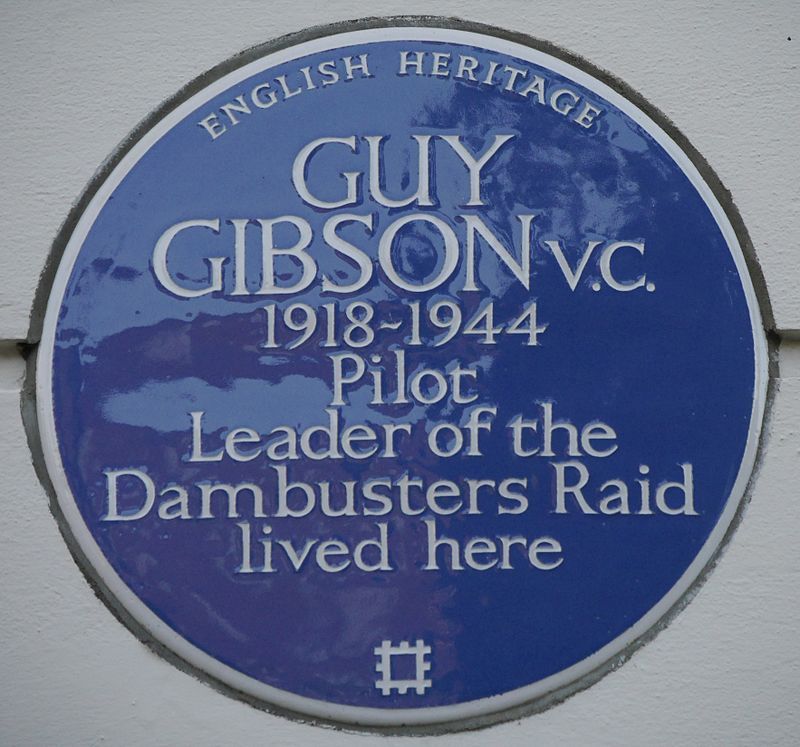
Dad had entered the war as a former RAF Halton apprentice and served on a number of bomber squadrons as an engine and airframe fitter before being accepted for pilot training. His last squadron prior to leaving for Flying training was 106 squadron, where the commanding officer was Guy Gibson, later to achieve fame with the Dam Buster squadron. Gibson consistently refused to forward Dad's application for pilot training on the basis that the RAF was swamped with aircrew applicants but trained maintainers were in short supply. However he ultimately succeeded in his aim when Gibson was on leave and his deputy signed off the necessary recommendation.
Whilst Gibson became subsequently famous he was not well liked by non commissioned members of the squadron, particularly by the NCO aircrew, as he was something of a martinet. He went on to achieve fame as the leader of the DAm Buster raid on the German dams in May 1943. Gibson was not destined to survive the war and was killed in action in mid 1944
Dad trained in what was then known as Rhodesia, commencing early in 1944 and gained his piots wings at Bulawayo in April 1945. He trained on the Fairchild Cornell basic trainer and then on to the North American Harvard for advanced flying training. Interestingly enough Dad put down Bombers as his preferred aircraft to fly but the service, in its infinite wisdom, decided he was destined for fighters. He subsequently moved up to an Operation Conversion Unit ( OCU ) in Egypt and qualified as a Spitfire pilot. Following the OCU he was posted to Malta to join 73 squadron. Interestingly, one of his fellow pilot trainees was Ezer Weisman, who subsequently gained fame as the Commander of the Israeli air Force and President of Israel in later years.
At this juncture the war in Europe had ended and he was declared redundant and told he would revert to his ground trade. However war time aircrew were leaving in droves and the RAF realised that they would be low on trained pilots so after 6 weeks the threatened redundancy was cancelled and, as he had been overseas for over 2 years , he was to continue his service as a pilot. As a RAF regular he did not have the option of leaving the service.The choice offered to him was either to remain in Malta and bring out the family for the duration of his tour or to return to the UK. He opted for the latter as Malta was in a pretty bad state after war time bombing and so he ended up at Horsham St Faith, hence my early memories.
Apart from the Spitfire Mk 16's the squadron operated in the Army Cooperation role, they also had some Miles Martinets plus a few Bristol Beaufighters, configured as Target Tugs and Dad converted onto the latter type shortly after joining the squadron. The mark 16 Spitfires were a hybrid aircraft, basically a mark 9 Spitfire with a Packard Merlin engine in place of the Rolls Royce Merlins.
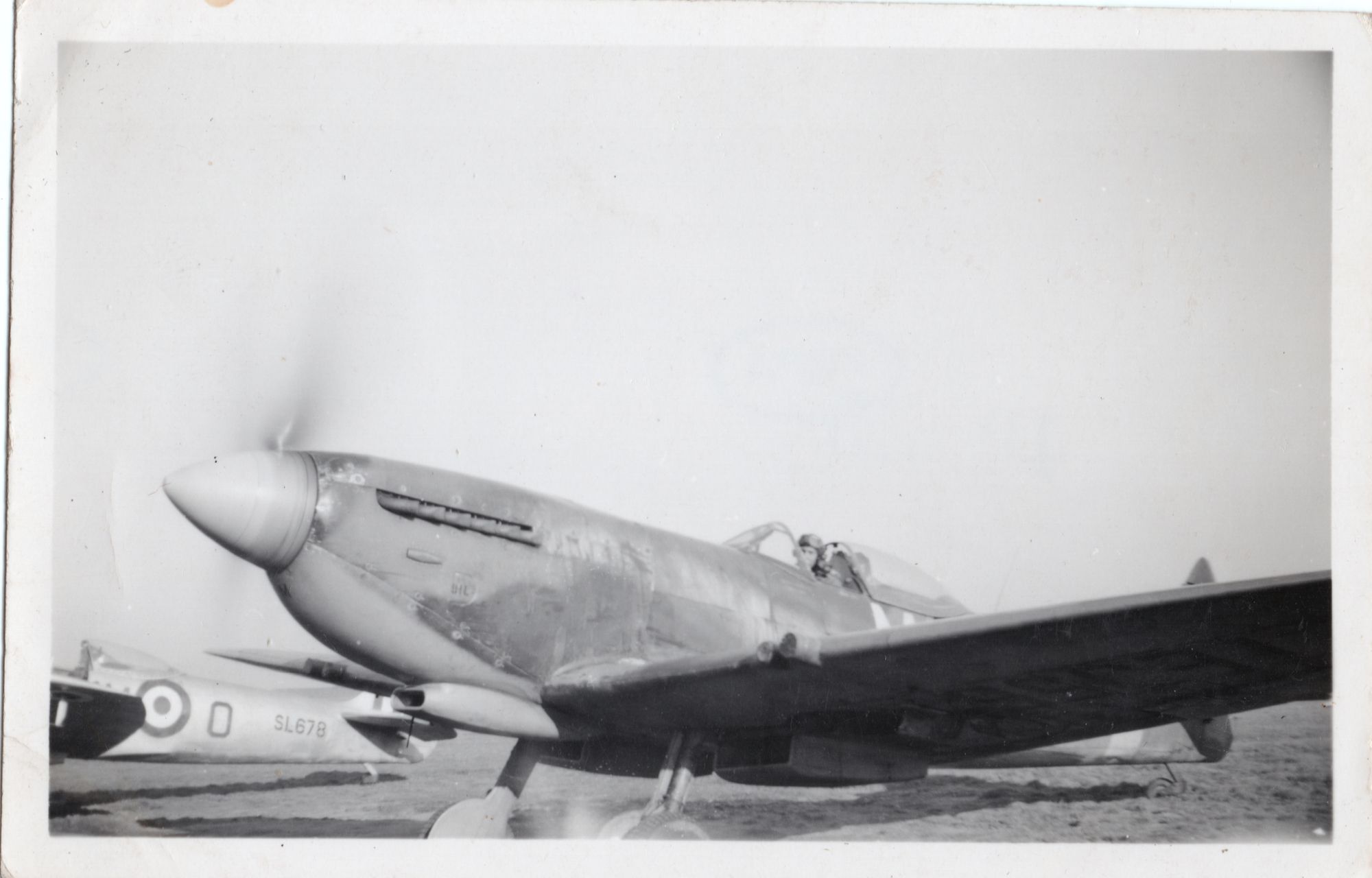
Dad in a Spitfire circa 1947
The family stayed at Horsham St Faith for the duration of Dad's tour, with the squadron being renumbered as 34 squadron prior to his departure. Shortly before that time Dad lost a friend on the squadron when his Beaufighter crashed during a low flying exercise. His friend's name was Jimmy Powell.
Dad liked flying the Beaufighter, notwithstanding it sometimes being a tricky aircraft to fly with a high accident rate and tricky ground handling. However in the postwar RAF accidents were a regular and often fatal event.
After the posting at Horsham St Faith timed out Dad volunteered for Bomber Command and trained on the Wellington as a multi engined pilot and then on to the Avro Lincoln which was a later derivative of the famed Lancaster bomber.
During this conversion training we lived briefly in the city of Lincoln and, on completion, the family moved to RAF Upwood in Huntingdonshire, where Dad joined 7 Squadron as an operational bomber pilot with his own crew. The Avro Lincoln was the last UK designed piston engined bomber to enter service with Bomber Command and was already obsolete by the early fifties. The aircraft nominally required a crew of 7 men and included pilot, navigator, flight engineer, bomb aimer, air signaller and two air gunners. It was rapidly phased out of service with the advent in the mid fifties of the all jet Canberra and subsequently V force with its Valiants, Victors and Vulcans. The Lincoln nominally required a crew of 7 men and included pilot, navigator, flight engineer, bomb aimer, air signaller and two air gunners.
RAF Upwood at this period had four Lincoln squadrons and was a front line bomber station. Crews from there were primarily UK based but overseas deployments were also a feature of life. Dad went on one of these deployments, to Egypt, to support UK forces out there. This involved lengthy non stop transit flights in an aircraft that was not pressurised and had few creature comforts. The crews were made of stern stuff in those days !
My recollections of Upwood are of a typical RAF airfield of that period. We lived in married quarters on the base in a modest 2 bedroomed semi detached house with few of the creature comforts we are now used to. I went to a small school in a nearby village, Bury, for the duration of our stay at Upwood, and it was there that I sat for and passed the dreaded 11 plus examination. This latter examination largely determined your future. If you passed then you went on to a grammar school with opportunities to continue onwards into higher education. If you failed then it consigned you to a secondary modern school or technical college with little chance of progressing into a profession.
At this time Dad was posted overseas to Nairobi in Kenya and the family decision was that I would remain in England whilst Mum and my younger brother Martin, only a year old, would accompany him there. To stay in the UK meant either boarding school or living with my grandparents and it was the latter course that the family opted for.
I moved to live with my grandparents in a mining village in South Yorkshire called Thurcroft, where my father had grown up. Grandfather was the Electrical Engineer at the local coal mine and had worked all his life in the mining industry apart from a spell of service with the Royal Navy during the first world war. He and my grandmother were to be effectively my parents for the remainder of my schooldays and I have happy memories of them and how well they looked after me.
In the seven years I was with them I attended Maltby Grammar School, which coincidentally, was the same school my father had attended, with the same headmaster in post. It was probably a good decision to remain with my grandparents as Dad and Mum, on returning from Kenya, were stationed at RAF Colerne near Bath, RAF Jurby on the Isle of Man where Dad made the transition from being an NCO pilot to commissioned rank. From there it was a move to RAF Sopley, Hampshire in the New Forest, as a Fighter Controller. Following on from that, a secondment to the Royal Artillery to operate pilotless aircraft as targets for guided weapons firings and then on to RAF Valley. The latter two posts were both on the island of Anglesey in North Wales and the family lived firstly in a small coastal village called Rhosneigr and then in Officers Married Quarters on the base at RAF Valley. They eventually spent over 5 years on Anglesey and enjoyed their time there.
Maltby Grammar was a middle level grammar school with the majority of the pupils having parents in or associated with the mining industry. At this time South Yorkshire was heavily populated with coal mining villages and coal was the king. As someone who transferred in I was something of a curiosity although my memories of the time at school there are largely happy ones. I was to spend 7 years at Maltby from the age of 11 to 18. I was a moderately successful pupil and went through school in the middle stream, not with the high flyers destined for University ! I think I surprised some of my teachers by passing enough 'O' level GCE subjects to get into the 6th form, which was where those destined for further education or the 'professions' spent 2 years prior to the 'A' level GCE examinations, a mandatory requirement for University entry or acceptance into ongoing professional life.
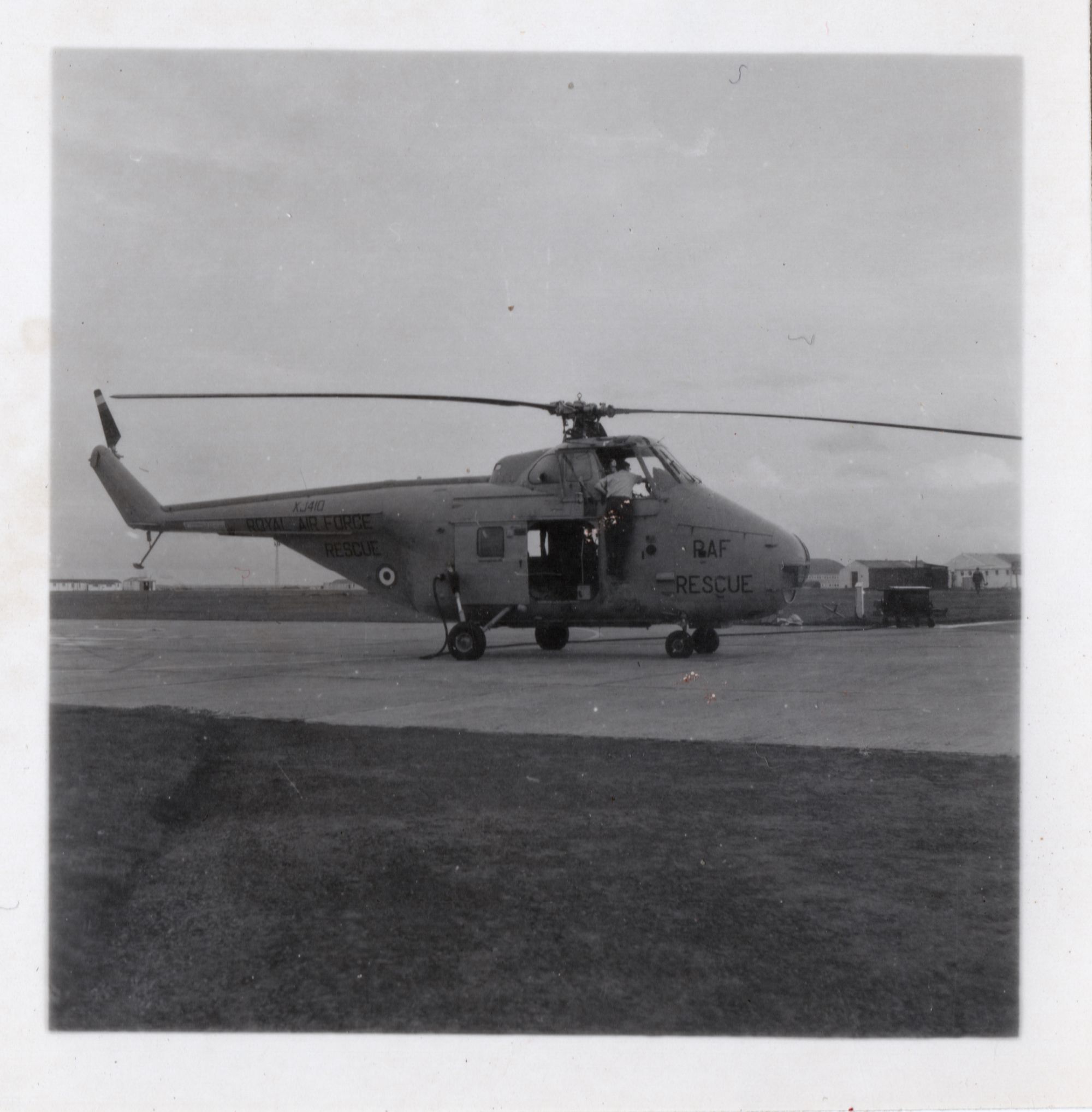
After his detachment to the Royal Artillery Dad managed to wangle a posting back onto active flying and trained as a search and rescue helicopter pilot. His last UK posting was that at RAF Valley
I have happy memories of spending my school holidays at these places with family Christmas gatherings and long summer holidays which seemed to last forever. The social life my parents lived was very much linked to their service friends. Mum was very much in her element as an officer's wife. The people who came to our social gatherings were an eclectic mix of RAF and Army officers and local people. Alcohol flowed freely and the talk ranged far and wide as these people generally were widely travelled and had seen a lot of life ! Living in Rhosneigr was especially pleasant as our house was only around 200 yards from the beach. Dad acquired a small sailing boat and it was there that I learned to sail.
My time at school came to an end at the age of 18, after sweating for my 'A' levels. I managed to pass all three subjects and then moved on out into the wide world of employment ! I was to leave my home life with the grandparents from that time, although I continued to see a lot of them for the remainder of their lives. They live on in my memory to this day.