Seafaring Days
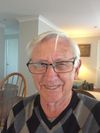
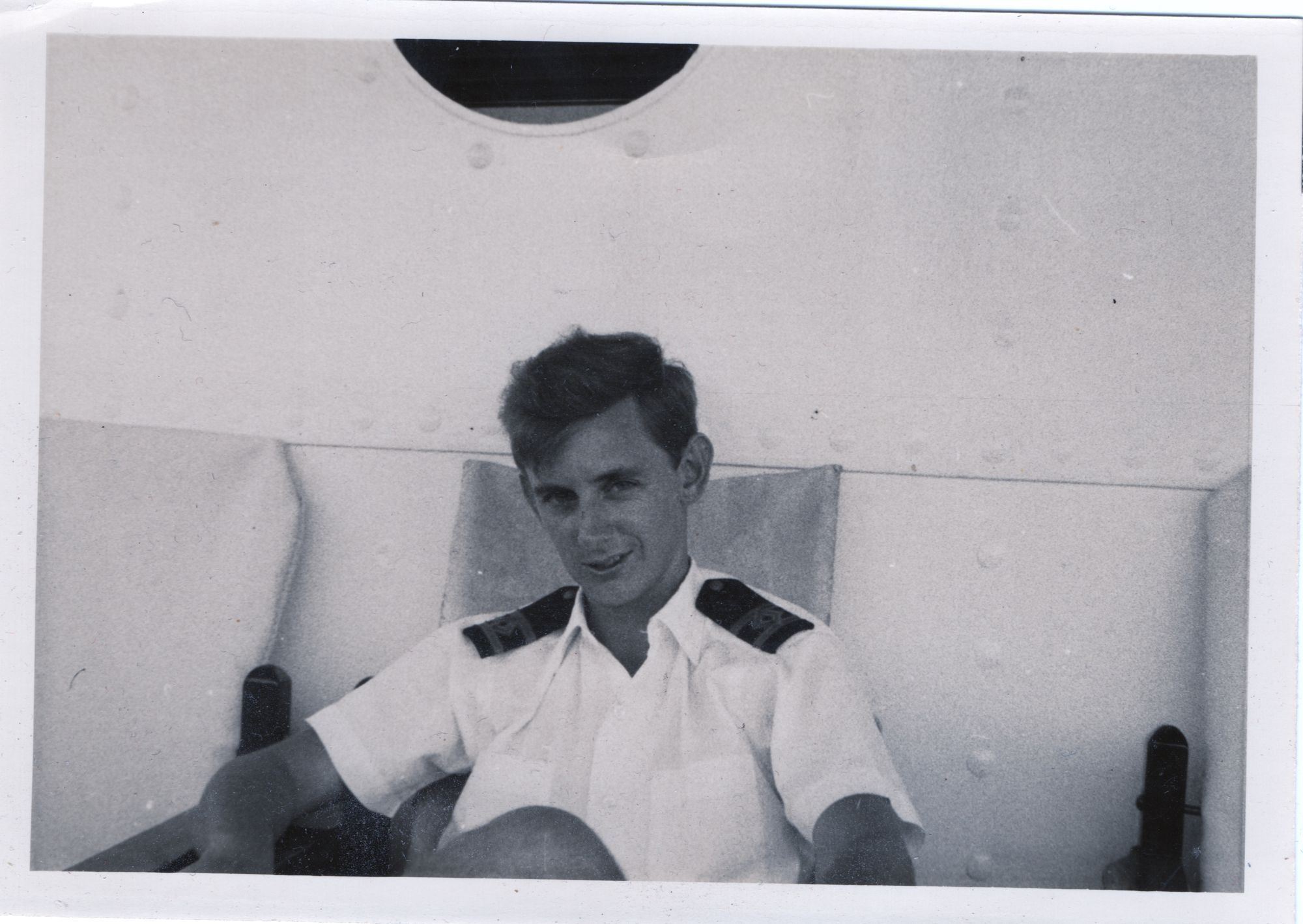
I finished working for the bank early in January 1964 and went direct from Wellington in Shropshire to Colwyn Bay in North Wales and enrolled immediately on the Radio course. I was given an outline of the syllabus and examination requirements to obtain the mandatory certification and started training the next day
To serve as a Radio Officer it was a requirement that one held a certificate issued by the Postmaster General. To obtain this one had to pass two examinations. The first of these was a theory paper on electrical and radio fundamentals and after this one could sit for a practical examination which examined your ability to maintain the onboard equipment and pass a morse test. The normal time from enrolment to to taking the theory paper was usually around 15 months with the practical examination being taken in the next academic term, say another 4 months later. The school worked on a term regime, similar to those of a school, so holiday breaks at Christmas, Easter and Summer could extend the training to close to 2 years. It was also quite usual for people to fail at the first attempt thus extending the course duration.
I actually persuaded the school to let me try the theory examination after 2 terms because of my previous RAF training and I passed, much to their surprise, on the first attempt. I then had to wait nearly 4 months before the next visit by an examiner before attempting the practical examination. This I duly passed and so in November 1964 I found myself in possession of a PMG certificate and set about finding seafaring employment. Looking back I think luck was with me to go through the whole training regime in 10 months !
Radio Officers, at this time, were employed either directly by shipping companies or by radio companies such as Marconi, who then supplied Radio Officers and equipment to these companies. With an eye to longer term career prospects I thought that working for a radio company was probably the better option. I therefore applied immediately to Marconi Marine to test the water. The initial response was not encouraging. Marconi told me that they had a glut of new applicants and were only taking candidates who held a Radar Maintenance certificate from the Board of Trade. To this end I moved up to Liverpool and enrolled in the mandatory training course to sit the BoT examination.
The Radar Maintenance course was one of 12 weeks duration followed by theory and practical examinations. It was intended to give Radio Officers the skills to maintain radar equipment on any ships that they served on and was generally recognised as a good qualification to hold. I joined Riversdale Technical College in Liverpool in January 1965 and passed the examination in early April, which was timely as funds were just about exhausted by this stage ! I had been supporting myself for the previous 12 months on a Council Grant plus some weekend / holiday work as a barman. By January the coffers were just about empty so I had to sell my motor scooter to fund the radar course. It was a close run thing !
Having gained the BoT Radar Maintenance certificate I then approached the local Marconi depot in Liverpool and got a very rapid response. I was rushed through a fairly intensive medical examination, issued with a Seafarers Discharge Book, given a letter of employment and an advance on salary to procure the required uniform. The uniform was very similar to that worn by RN officers but with different brass button emblems, cap badge and different gold braid rings on the sleeves. The RN Officers had a loop above the gold braid whereas Merchant Navy Officers sported a diamond shape. One's specialist skills was defined by the coloured backing to the braid with Radio Officers having green background to the gold braid.
Shortly after joining Marconi I was then appointed to my first ship and I joined the SS Manchester Spinner in Manchester docks on 26th April 1965
In the days before satellite communication all merchant ships above 1600 tons were required to carry a Radio Officer. The number carried depended on the class and type of ship with a large passenger liner probably carrying half a dozen or more with 24 hours watchkeeping but most general cargo ships and tankers only required a single Radio Officer who maintained watch for 8 hours each day. This was not 8 hours continual watch but, rather, 2 hours on and 2 hours off so a typical day would start at 0800 and finish at 2200. Out of hours monitoring of the distress channel was done automatically over the intervening hours. Most communication was by morse in Wireless Telegraphy ( WT ). In modern eyes this probably seems an archaic process but was, in fact, a very efficient method of communication. Messages would be passed through severe interference which would render speech messages unreadable. The UK maintained a number of overseas radio stations manned by Royal Navy staff plus a large long range station at Portishead near Bristol. Wherever you were in the world the chances are that you could contact one of these and have your message forwarded. Places like Hong Kong and Mauritius could usually be contacted if you were in the Pacific or Indian Oceans and Portishead would be easy to use from the Atlantic. Additionally most countries had their own Marine Coast stations one could contact. In these days if you wanted to make a ship to shore telephone call the Radio Officer normally had to set up the link before letting the user online and quality sometimes left something to be desired.
At this time Marine coast stations used the medium frequency band ( MF ) for communications within 200 miles, or thereabouts, of the coast and High Frequency ( HF ) bands for longer radio range. HF operating was something of a 'Black Art ' as one had to select the optimum radio band to achieve long distance communications. Printed tables of optimum and maximum useable frequencies were available but these were by no means foolproof !
The first ship I joined, the SS Manchester Spinner was a general cargo ship that could also carry 12 passengers. Ships carrying more than 12 passengers had to have a ship's doctor so 12 was usually the limit on most cargo ships to avoid the expense of carrying a Medical Officer. On being directed to join a ship in Manchester this led to some confusion on my part as I didn't know that their were docks there ! In fact Manchester had a large ship canal linked to the Mersey estuary near Liverpool. Manchester Liners, who owned the Manchester Spinner, operated a line from Manchester to Eastern Canada with regular sailings and it was this route that we took on my first seagoing voyage. The ship went into Montreal then up the St Lawrence to the Great Lakes where we called at Toronto and Hamilton in Ontario and then it was a reverse journey terminating in Manchester.
It was a Board of Trade regulation that all new Radio Officers had to spend at least 6 months as a junior, with a senior Radio Officer as their mentor, before being allowed to sail unsupervised. This was the case for myself and the Manchester Spinner was perhaps not a good ship to start with, as the transatlantic voyage to Montreal took about 8 days only, after which their were few duties required of the Radio Officer. The combined oceanic voyage was only around 17 days so the work load was light and chances to practice my skills was limited. My next ship proved to be totally different. After a short leave I was ordered to Southampton to join a ship called the Esso Edinburgh at Fawley oil terminal.
The Esso Edinburgh was a 48000 ton oil tanker, nearly 850 feet long and with much more modern radio equipment. The crew were all UK nationals. It was the largest ship I was to sail on and very well appointed. Even as a junior I had my own bathroom and a double bed, rather than a bunk. The ship also sported a swimming pool. After crew signing on we left Fawley, in the Solent, for the Arabian Gulf travelling via the Mediterranean, Suez canal and the Red Sea to the Arabian Gulf. With a tanker you often didn't know where you would be loading for until after leaving the Gulf. Destinations were often detailed in a radio message with frequent changes dictated by where the crude oil was needed. In our case we travelled in ballast to the Gulf and loaded for Japan where we duly unloaded in a port called Kawasaki near Yokohama. As the tank farm was full we actually got to stay alongside for 6 days. Usually tankers would arrive at a terminal and discharge their cargo within 24 hours I was indeed fortunate in how I got my first view of Japan. This was what I had signed on for !
From cargo discharge in Japan it was back in ballast to the Arabian Gulf and loading for Canada, after which we remained on the American east coast carrying crude oil from Venezuela to New York, or more specifically Bayonne in New Jersey, just across from New York city. As a regular caller in that city we got plenty of chances to look around. After several runs up and down the eastern seaboard of the USA we were nearing crew relief and so we loaded in Lake Maracaibo, Venezuela for Antwerp in Belgium where the crew paid off and all went off on leave.
The Esso Edinburgh was a good ship for a trainee as the radio traffic was quite heavy. From the technical perspective it was also a good ship as, when the Master realised I had a radar maintenance ticket, I picked up the job of keeping the radar operational. Radar was, and is, not a 'means of navigation' but rather an 'aid to navigation'. Notwithstanding this distinction, most Masters were unhappy if they found themselves without an operational radar, particularly in areas of high marine traffic or poor visibility. In fact one of the main factors influencing how the Master viewed you was your ability to keep this asset working.
After paying off from 5 months on this tanker I was now 6 month qualified and had some outstanding leave due, only to be recalled by Marconi to the East Ham depot in London after a couple of weeks. I arrived there to be handed an airline ticket to Accra in Ghana. I was to replace an R.O who had been taken ill in Takoradi. The ship had just arrived in West Africa from Europe and was discharging the cargo prior to heading to Lagos in Nigeria and then loading up in the creeks at the mouth of the Niger, one of Africa's great rivers.. The ship was called the SS Niger Palm and belonged to Palm Line , a subsidiary of Lever Brothers. It was, what I came to realise later, a fairly standard cargo ship of around 8000 tons. We had the usual complement of officers, all from the UK, with a Nigerian crew. Officer manning was Master, Chief, Second and Third Officer, Chief Engineer, Second and two Third Engineers with myself as the sole Radio Officer. More specialised ships would often carry other officers such as Electrical Officers, Refrigeration Engineers, Medical Officers or Pursers, depending on the type of vessel.
On the Europe bound leg of the voyage back to Europe we received news that the ship had been sold and we were to proceed to Rotterdam and pay off and this, in fact, was just what we did, catching the ferry from Rotterdam back to Harwich and then, after the mandatory check in with the Marconi East Ham depot, off on to leave.
The Marconi depot closest to ones joining port was the one who owned you and allocated your next ship.If the shipping company liked you then usually you could stay with that companies ships. However, if you paid off overseas then one came under control of East Ham depot, which was convenient to Heathrow and Gatwick airports.
Leave at this time was based from my grandparents house in South Yorkshire as my father, mother and brother had relocated to Cyprus for a 3 year posting from the end of 1964. My father was flying helicopters from RAF Akrotiri in the south of the island and he, mum and martin lived in officers married quarters on the base.
After 9 days leave the recall telegram arrived from Marconi's with instruction to report back to East Ham depot for a new ship. This proved to be an Ellerman Line vessel called MV City of Wellington and was discharging in the Royal Albert Dock in East London, now long swallowed in urban development around London City Airport. Marconi assured me that the ship was discharging around the UK and European Coast and would then be off to India. Fine, says I, India sounds interesting. Once on board I found this was untrue and the ship was actually permanently on the UK - Far East route. Even Better !
The City of Wellngton was a 7700 tons motor ship, rather than steamship, powered by a large a Doxford diesel engine, which meant she was quite a noisy ship compared to my previous ones, which had been steam driven. Having said that, one soon got used to the difference in noise and vibration. The route served was a regular service from the Europe / UK to Japan. The crew were the usual mix of UK officers and a Hong Kong Chinese crew.
As the ship had just come inbound from Japan, then the deep sea crew went off on leave and a coastal crew took over for the month it took to discharge and then load for the outbound journey. We discharged then loaded in Hamburg, Rotterdam, Le Havre and finally Middlesborough.The deep sea crew rejoined in Middlesborough and off we all went to the Far East. This was what I had signed on for ! We sailed from the UK via the Mediterranean and Suez canal to Aden and then on to the Far East. The itinerary was Penang, Port Swettenham ( for Kuala Lumpur ), Singapore, Hong Kong then on to a number of Japanese ports. After this it was homeward bound via Manila, Taiwan, Hong Kong and Singapore.
On the return to Singapore I met up with some of my old colleagues from the RAF who were deployed out there at RAF Changi, now a huge airport but at that time a military airfield. This was the time of the Indonesian Confrontation with the newly formed Malaysia, and the UK supported the latter with Naval, Air Force and Army units. My friends were flying patrols around the Borneo coast and Malacca Straits to look out for hostile incursions. Sadly, one of these former colleagues, my oldest friend who had been at school with me and joined the RAF with me, was to die in a motor accident on his return to Scotland so this was the last time we were fated to meet.
I enjoyed my time on the City of Wellington and they seemed to like me as I was asked to come back on the next Far East voyage. Something I would have been glad to do. Sadly, fate in the form of a Seaman's strike in the UK intervened. As the ship would be strikebound once it reached the UK all the discharging and reloading was to be in the European ports with the UK being the last loading point. I had booked to visit my parents in Cyprus, who I hadn't seen in 19 months, so I ended up leaving the ship to take my leave.
The next 6 weeks were spent on an extended visit to Cyprus. An enjoyable family reunion and opportunity to do some serious relaxing. It was a happy time for the family as my father had just been awarded the Air Force Cross ( AFC ) for a particularly hazardous search and rescue mission. This was a fairly serious decoration to hold and given out only sparingly.
The Cyprus posting was to be the last one in my father's RAF career. He finished his time there as the Helicopter Flight Commander and with an 'exceptional' assessment as a pilot. However the RAF in its wisdom decreed that he was to go back to the UK and become a Fighter Controller. Not wanting to give up flying, Dad took redundancy and went on to manage a further 9 years as a Civilian pilot.He had served exactly 30 years to the month when he left the Royal Air Force.
After the Cyprus leave break I was allocated to another Ellerman Line ship, this one being the 'City of Singapore'. This vessel traded between Canada and the Indian sub continent and never returned to the UK. Crew changes were carried out in Gibraltar and this was where I and the new crew joined the ship. Whilst I was content initially to join another ' City ' boat, she was to prove something of a disappointment after her predecessor. The ship was older and less comfortable with an Indian crew with European officers.
I was to spend nearly 8 months voyaging backwards and forwards between Canada and India. A 'run ashore' had been an enjoyable event on the Far East run but much less so on this route. Montreal was the terminus in Canada and Karachi, Bombay, Cochin, Colombo, Madras and Calcutta , to use their then names, were the sub Continent ports. The work load on the ship was light so fending off boredom became something of an issue !
After the' City of Singapore' it was off to Cyprus again for some more leave and then, rather than a new ship, I was put on a training course on the latest Marconi radar product, which meant 4 weeks in East London living in a B and B and soaking up what the Company had to offer to the world of marine radar! At the end of the course I received a summons to see the man who allocated oneself to a ship. He was often courted, by means of plying him with beer at the local pub, to ensure posting to a good ship. It didn't always work ! He informed me that the Company expected all young, unattached Radio Officers to undertake a period of foreign service and then sat back expecting the usual protest that this would normally evoke ! These deployments often ran as long as 2 years and had been the death of many relationships. Not many girlfriends would wait for 2 years ! Being unattached, I didn't demur at his words and waited to see what was on offer. The first was a British India ( BI ) passenger ship running from Bombay to Mombassa as 2nd R/O for 2 years or, alternatively, their were two Jardine Matheson ships in Hong Kong needing an R/O. I jumped in at this juncture and said I'll take the first of these ! I had seen Jardine ships in Hong Kong and knew something of their reputation so the prospect of joining one and spending 2 years in the Orient was most appealing. Within 48 hours I was on a Qantas 707 bound for Hong Kong !
Jardines were one of the original Hong Kong trading companies and dated back to the British acquisition of the colony in the nineteenth century. They owned and operated their own shipping company, the Indo China Steam Navigation Company. Their ships plied the routes between Japan, China and Hong Kong then down to Australia or India. They also operated a couple of small ships running between the North Borneo ports up to Hong Kong carrying a cargo of timber, and it was one of these vessels that I joined. She was the SS Ho Sang, a 3550 ton vessel, originally built in1944 as a tank transporter for military service. As she had no tween decks then she was ideal for the timber trade as the cargo consisted of whole tree trunks. The engine was an old fashioned steam reciprocating motor, almost totally silent when underway, so it was almost like being on a sailing ship when underway. These were definitely the last days of the 'Raj' as all officers had a steward who would clean your cabin, launder your uniform and respond to a bell push from your cabin to bring up ones refreshment requirements ! For this we paid the stewards individually a little extra over the wage from the shipping line. It was well worth it for the privilege to live as a young gentleman !
The usual route was southbound from Hong Kong to Sandakan in Sabah, in Malaysian Borneo, where we discharged cargo at the wharf then sat out in the river at anchor whilst the timber cargo was loaded. Loading tree trunks was a slow laborious process as they were all winched on board individually. We would typically load for around 5 days and then move on to places like Tawau, Semporna and Wallace Bay prior to the return voyage, usually to Hong Kong but occasionally to Japan. On arrival in Hong Kong the ship discharged the logs we carried at an anchorage behind Stonecutters Island, close to where the new airport in Hong Kong is now situated, and most of us repaired ashore for 5 days recreation before rejoining the ship. Hong Kong at this time was a very lively place, few tourists but a multitude of American servicemen on R and R from the Vietnam war. Our usual routine on leaving the ship was to head for the Captain's Bar in the Hong Kong Mandarin Hotel then head off to enjoy what Hong Kong had to offer, which was a lot for a young single male ! After 5 days we were usually ready to head off to sea to recuperate.
Sandakan was the high spot of the Borneo coast as Jardine's paid for us to be members of the Yacht Club and Golf Club plus there was a nice bar in town known as the Coconut Grove Bar for a good run ashore most evenings. The crew on the Ho Sang were all Hong Kong Chinese, who much appreciated the ship as they got home to their families every 6 weeks. They were, in the main, considerably older than we few Europeans on board. Numbered amongst these locals was the cook, who was first rate. On arrival in Sandakan he would be away to the market for fresh vegetables , fruit and fish. We dined well ! Invitations for dinner by friends in Sandakan were always sought after !
We carried over 70 crew, which was a very large number for a small cargo ship. The reason for this being that we performed all the timber loading ourselves with no shoreside assistance.
The officer complement comprised a Master, Chief, Second and Third Officer plus a Chief Engineer and two other Engineers plus myself as Radio Officer. Of these the Third Officer and the two junior engineers were Chinese with the remaining 5 of us being UK or Aussies. The average age of the Chinese crew would have been much higher than we Europeans and I think they viewed us with some amusement, they being mainly family men and most of us being young and single !
Whilst she was an old fashioned ship with few creature comforts the Ho Sang was to prove to be the best ship I was to sail on. Our route from Hong Kong to Borneo took us directly across the normally calm South China Sea and ,at a leisurely 9 knots, it took 5 days to make the passage. Blue skies and calm seas were the norm with the occasional Typhoon during the summer months. My only close encounter with a typhoon was to be on this ship on one of our voyages to Japan. We were routed from Osaka to Nagoya and the Master decided we could make this short passage before an oncoming Typhoon reached our area. He was proved wrong as he hadn't allowed for the fact that the surface movement of the storm picked up speed as it enters colder climes. We got most of the way around to Nagoya before the storm caught us and we ended up experiencing the eye of the typhoon passing over us. I can say from experience that there really is a period of calm wind as one goes through the eye of the typhoon, although the sea state remains very rough. The first officer refused a direct order from the master to take some crew down below to secure some large steel pipes in the cargo that had broken loose. He felt we could end up with some fatalities if he complied. After we rode out the storm nothing further was said of the incident but the first mate was correct in his assessment of the danger involved. I recall spending the whole night in the radio room, ready to send a distress message but, fortunately, the ship rode out the storm safely, albeit a bit damaged.
I was meant to stay with the Ho Sang for 2 years, that being the original Marconi briefing prior to flying out to Hong Kong. It was a very pleasant existence with congenial crew mates, helped by the fact that I had met the a young lady in Sandakan, Elena, who was destined to become my wife. Elena was working as a radio operator with the Sabah Timber Company, who were our main shippers of timber on the Ho Sang. She came down with a group of young friends to an Officers party on the ship and from then we met up on my every voyage to Sabah. She even managed a voyage with us on the Ho Sang as she was due home leave in the Philippines so travelled with us to Hong Kong before flying on to see her family in manila.
However fate was to take a hand in the shape of a message from Jardines informing us that after our current voyage the ship was to be sold. In the event, the voyage ended up being extended as the ship ran aground on a poorly charted reef around the top end of Borneo and we had to part discharge our cargo of logs until the ship refloated and then load her again. We were then routed back to Sandakan prior to the final return voyage to Hon Kong. This gave me the opportunity of asking Elena to marry me. After giving it some thought she agreed and that was to shape our future from then onwards.
On returning to Hong Kong the crew remained with the ship for some time whilst a damage assessment, prior to completion of the sale, was carried out in dry dock and I was then given a flight ticket back to the UK. I was asked if I would like to stay on for the remaining 7 months of my 2 year term in Hong Kong and join a newly acquired ship that was to trade between Hong Kong and the West Coast of the USA. However this would mean moving Elena to Hong Kong and me being in port there for only 4 or 5 days every 3 months or so. Having made the decision to marry I decided that it was time to look for shoreside employment.
As a Radio Officer paying off a ship overseas I came under the control of the London Marconi depot and it was to there that I reported after flying back in to the UK. Having sorted out my leave and outstanding salary owed to me I informed the company that I was resigning with immediate effect. The response I got was a big surprise as they immediately asked me if I would consider joining the company shore technical staff as a technician. Rather than become unemployed this seemed an eminently agreeable solution and I immediately responded in the affirmative. Being offered shore employment, in the past, had only been offered to those who had over 10 years sea time however Marconi had decided that younger blood was now the order of the day.
I then went away on leave and waited for the written offer of a job to appear but after several days nothing was forthcoming so I sent out a formal letter of resignation, only for this to cross in the post with the job offer from Marconi. Once this issue was resolved I was then asked which depot I would like to join and was offered Southampton as an option, which i immediately accepted. It transpired that Southampton depot was the most sought after shore post although I was ignorant of this fact until I presented myself to start work after my leave was completed.
Looking back on my seafaring days over the years, I can truthfully say that I would not have missed it for the world. I went to sea with the intention of seeing the world and in this I was to be successful. It was always my intention to spend a limited time at sea until I had fill of voyaging. With the gift of hindsight I suspect that if I had not met and married Elena I might well have ended up staying at sea indefinitely and that would have taken my life down a very different path to that which I now embarked upon.
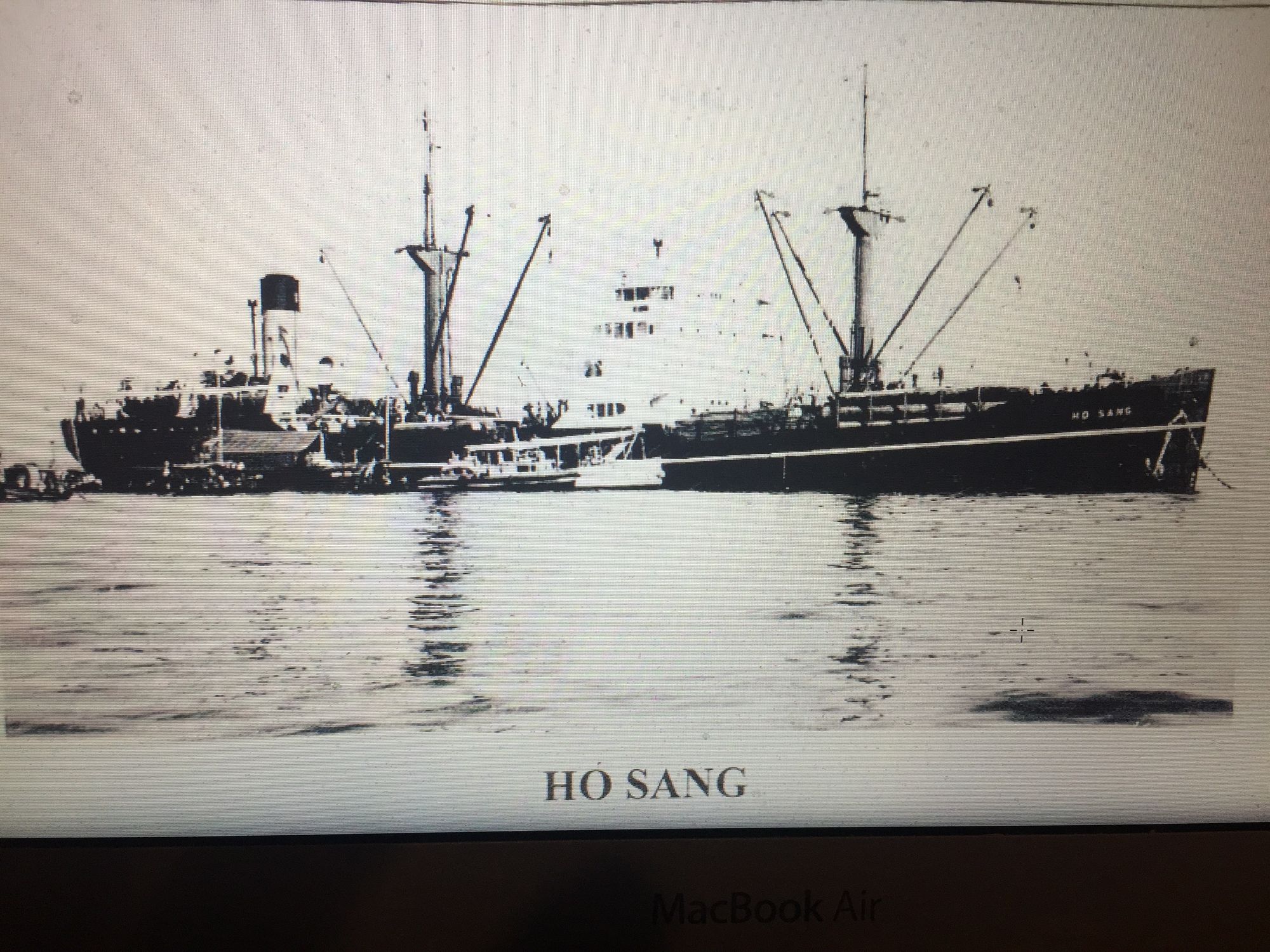
Managed to locate an old photo of the SS Ho Sang, my last ship, now long gone to the scrap yard. She was built in 1944 as a wartime tank transporter and then finally ended up with the Jardine Matheson fleet plying the timber trade between Hong Kong and the North Borneo ports. On a good day she could manage 10 knots. In Jardines they were known as 'H Boats '